
Welcome Message

Welcome Message from the Conference Chair

Welcome Message from the Conference Chair

On behalf of the organizing committee, it is my great honor to welcome you to the Species on the Move 2026 Conference in Taiwan, which marks the 10th anniversary of this distinguished international forum.

From its beginnings in Tasmania in 2016, followed by South Africa in 2019 and Florida in 2023, we are excited to bring SOTM to Asia for the very first time. Building on the success of past conferences, we look forward to welcoming 150–200 participants from more than 20 countries.

This year, we unite multifaceted research under seven major themes, with a strengthened focus on temporal dynamics and ecosystem transitions. We will also emphasize cross-theme connections to foster interdisciplinary dialogue and new insights.

Taiwan hosts diverse ecosystems, from vibrant coral reefs to mountain landscapes. This resilient island, shaped by natural forces and now experiencing rapid warming, provides a compelling setting to explore ecosystem responses. Participants will also have the opportunity to experience Taiwan’s unique tropical montane cloud forests and learn how indigenous knowledge contributes to local climate adaptation.

We look forward to sharing knowledge and building lasting connections that extend far beyond our time together.

I-Ching Chen
Chair, Species on the Move 2026 Conference (SOTM 2026)
Professor, Department of Life Sciences, National Cheng Kung University, Taiwan
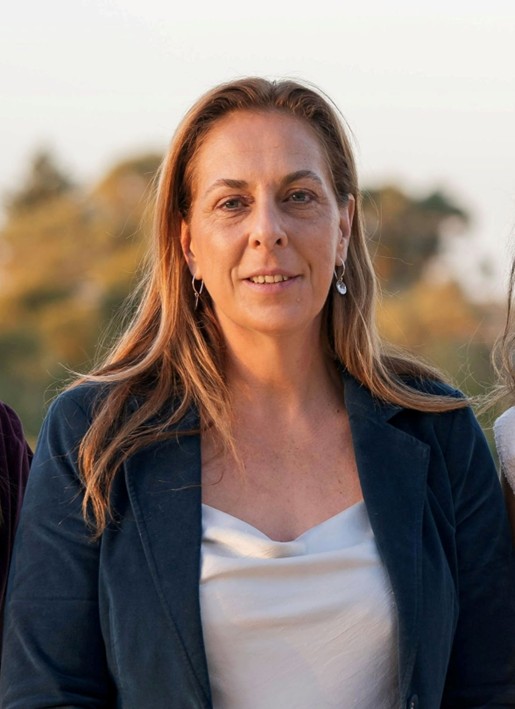
Welcome Statement from Professor Gretta Pecl, Founder of the Species on the Move Conference Series

Welcome to Species on the Move 2026 in Taiwan.

The prospect of gathering once again with such a diverse and passionate community of thinkers, knowledge holders, and changemakers is a genuine pleasure. When we launched this conference series in Hobart in 2016, our goal was ambitious: to create a space where the climate-driven redistribution of life on Earth could be explored in its full complexity — from genes and physiology, to ecosystems, cultures, economies, and human wellbeing.

We knew this challenge demanded a whole-of-system approach, and that meaningful progress would only come through deep interdisciplinary collaboration and the inclusion of diverse knowledge systems.

This conference series has been part of a personal pivot — from research pursued following personal interests, to work that I hope contributes to the shift we urgently need: science that serves humanity and the planet at an incredibly critical juncture.

Biodiversity underpins more than half of our global GDP, but far more importantly, our relationship with nature is fundamental to our health, identity, and culture. The redistribution of species is not just an ecological phenomenon — it is a social, cultural, and economic one, with profound implications for livelihoods, food security, conservation, and justice.

We are here to build bridges — across disciplines, regions, and worldviews. We are here to listen, to learn, and to co-create solutions that are inclusive, equitable, and transformative. Indigenous knowledge, local experience, and scientific insight all have vital roles to play in shaping our responses.

From the beginning, Species on the Move has aimed to embody a better way of doing science — one that is welcoming, family-friendly, values-driven, and deeply committed to equity.

We support early career researchers and strive to elevate underrepresented voices and make Species on the Move a space where everyone feels they belong. Thank you for being part of this journey. I’m excited for the conversations, collaborations, and connections that will emerge here — and for the collective momentum we continue to build toward a more just and resilient future for people and the planet.

Gretta Pecl,
Professor of Interdisciplinary Climate Change Ecology at the Institute for Marine and Antarctic Studies (IMAS) at the University of Tasmania (UTAS), and Director of the Centre for Marine Socioecology, also at UTAS